A fair draw
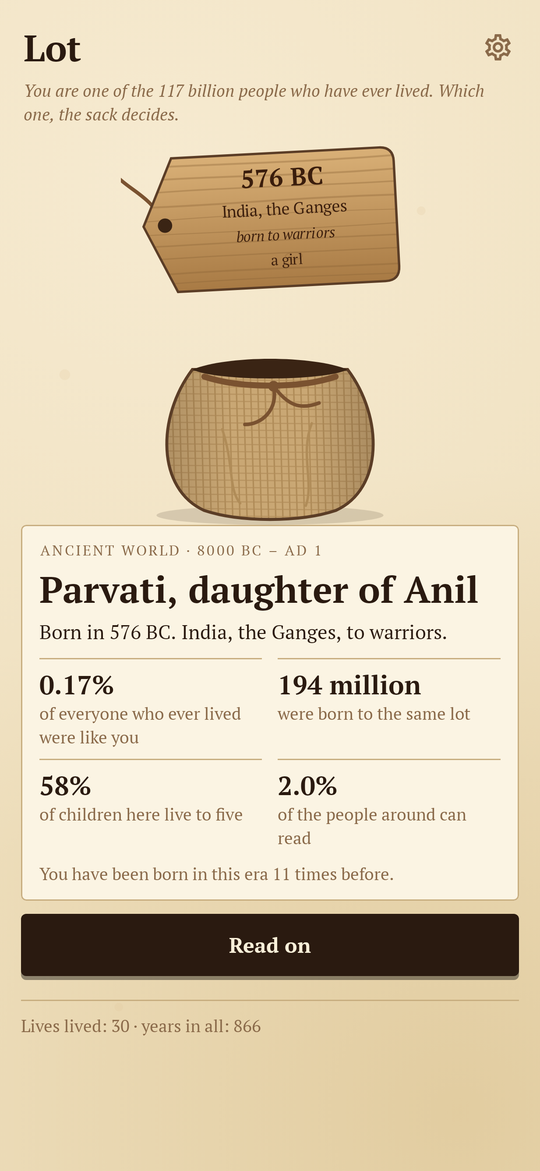
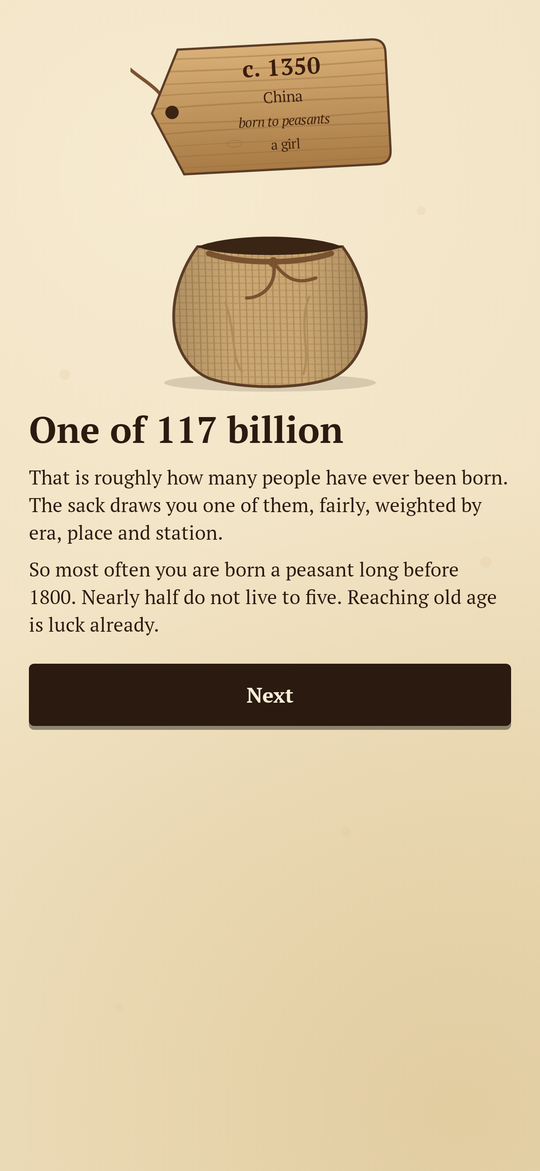
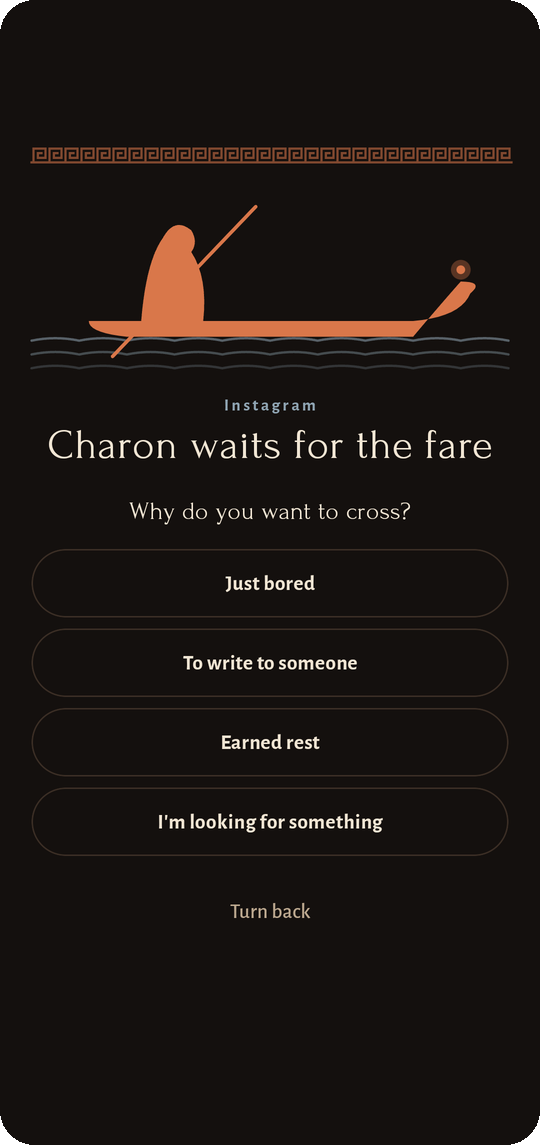
The sack follows the Population Reference Bureau's estimate of everyone ever born: the Stone Age, the ancient world, two middle ages, the early modern centuries, the age of machines and our time, each by how many people were born in it, then by region and family. A wooden tag rises out of it with the year, the place and the family burnt in, and the odds beside it.
The parish register
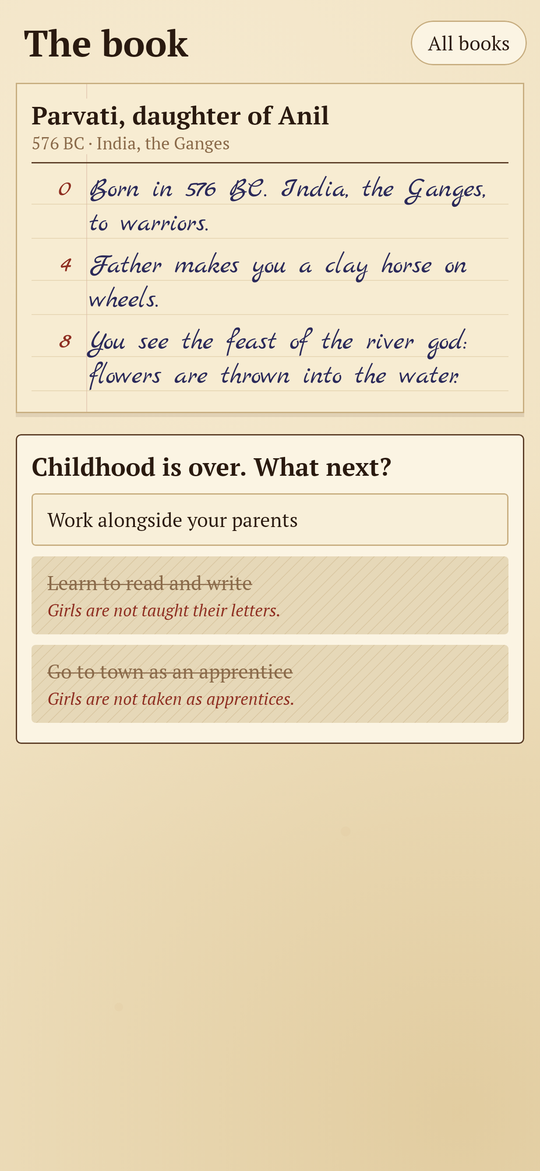
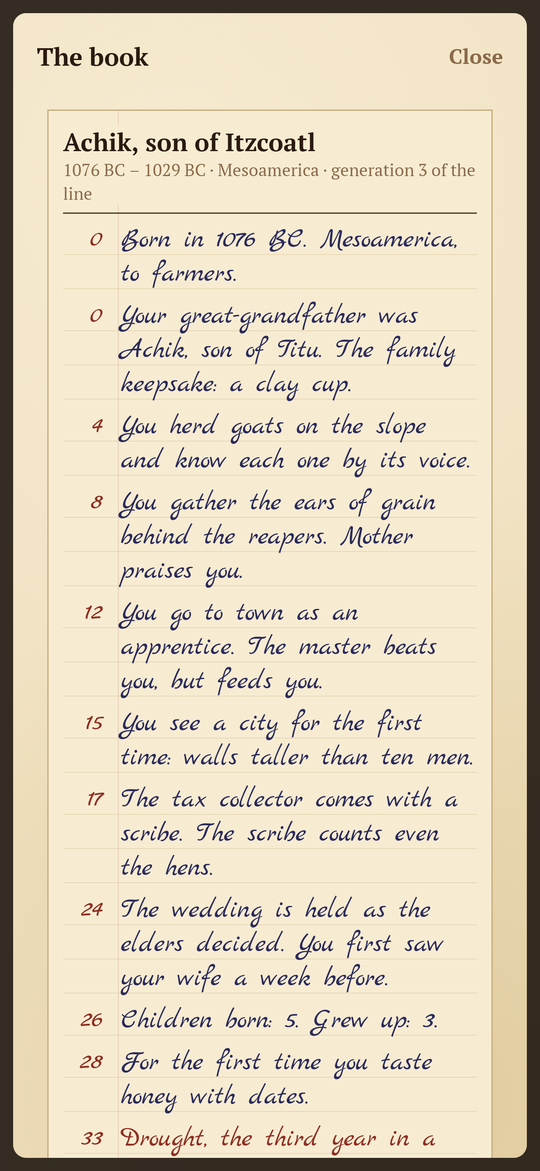
The life is written in the registrar's hand, a few years a page: childhood, work, a match, hard times, old age. About 2,200 everyday lines across six ages, tied to region, family, sex and years, each in Russian and English. And about 150 everyday forks: a stranger asks for shelter, the recruiting sergeant comes, a cousin abroad offers work.
History from the side
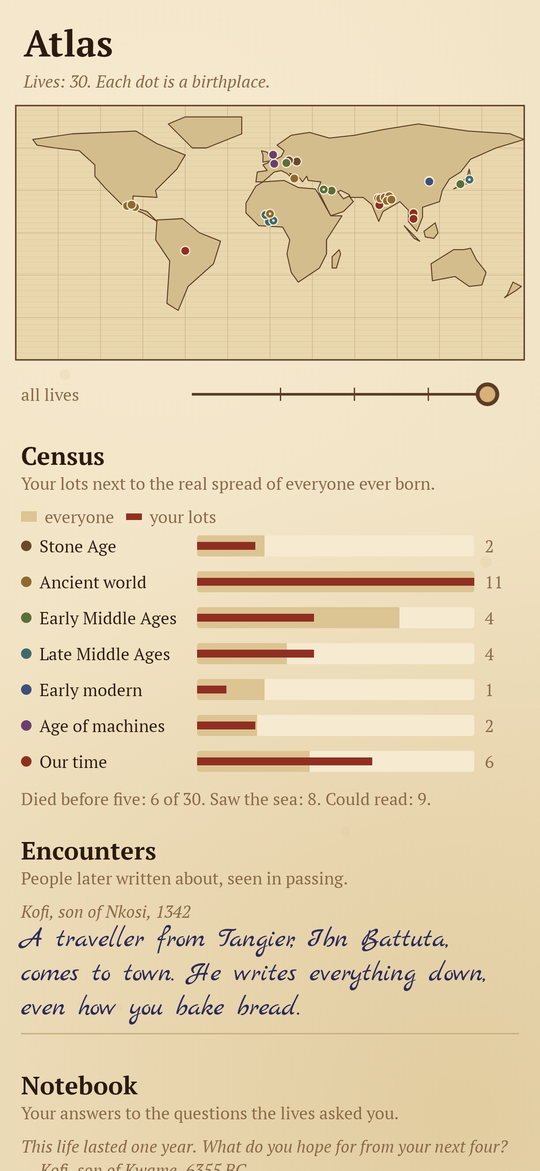
465 real events reach a life as rumours and consequences: the Black Death, the Mongols, the silk caravans, the Partition, the first satellite crawling across the sky. Rarely you pass one of 49 people later written about: Socrates arguing in the square, Ibn Battuta writing down how you bake bread. The chronicle in the atlas collects them all.
Shut doors
At each fork every door is shown. Some are shut, struck through, and say why: girls are not taught their letters, you are not free to leave, the elders have already agreed. Inequality, without a lecture. Or be a witness and let fate choose. And if you like, ask the sack for an era, a part of the world or to be born a boy or a girl: within that it keeps the real weights.
The chest
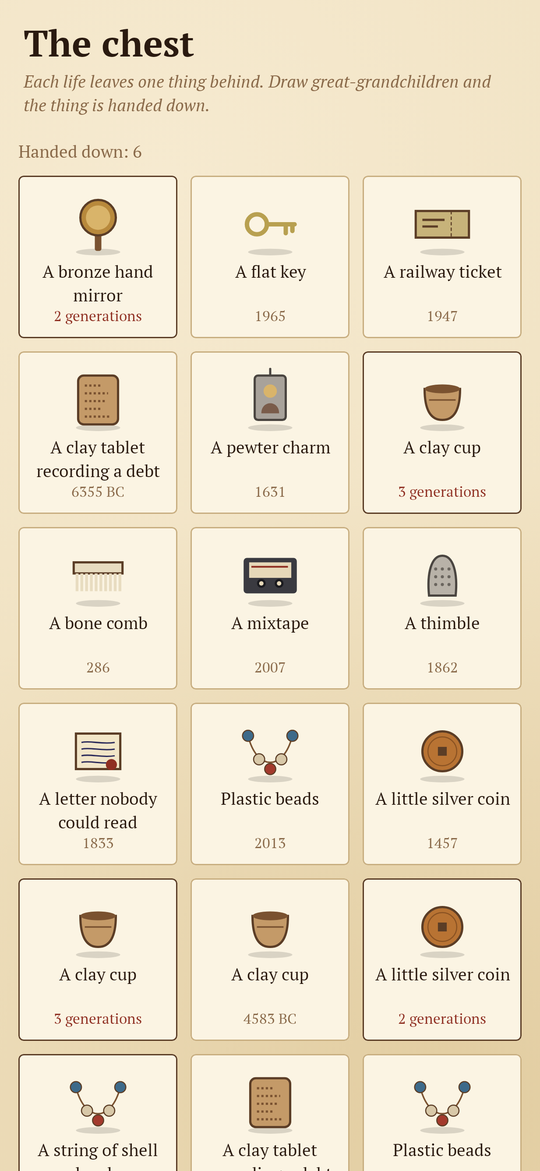
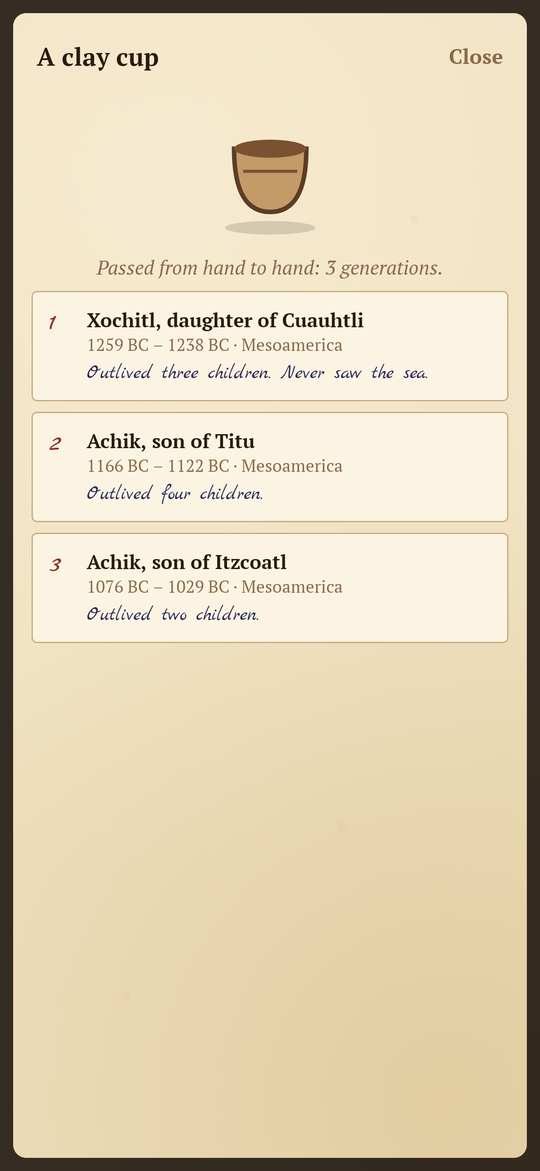
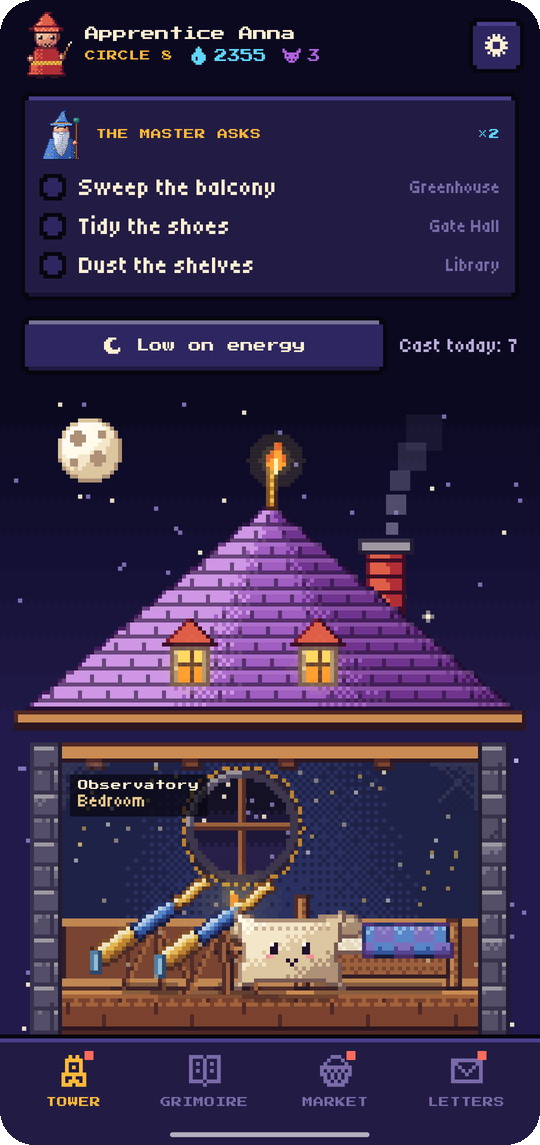
Each life leaves one thing, drawn in code: a bone needle, a clay tablet recording a debt, a greatcoat button, a push-button phone.
Great-grandchildren
After a life with children, draw a great-grandchild's lot, born 70 to 94 years later in the same place. They inherit the surname, the family's means and the same thing, which gathers its holders generation after generation.
A question for you
At the end a life asks one quiet question about you today: this person never saw the sea, so when was the sea last in front of your eyes? The answers gather in a notebook.
The atlas and the census
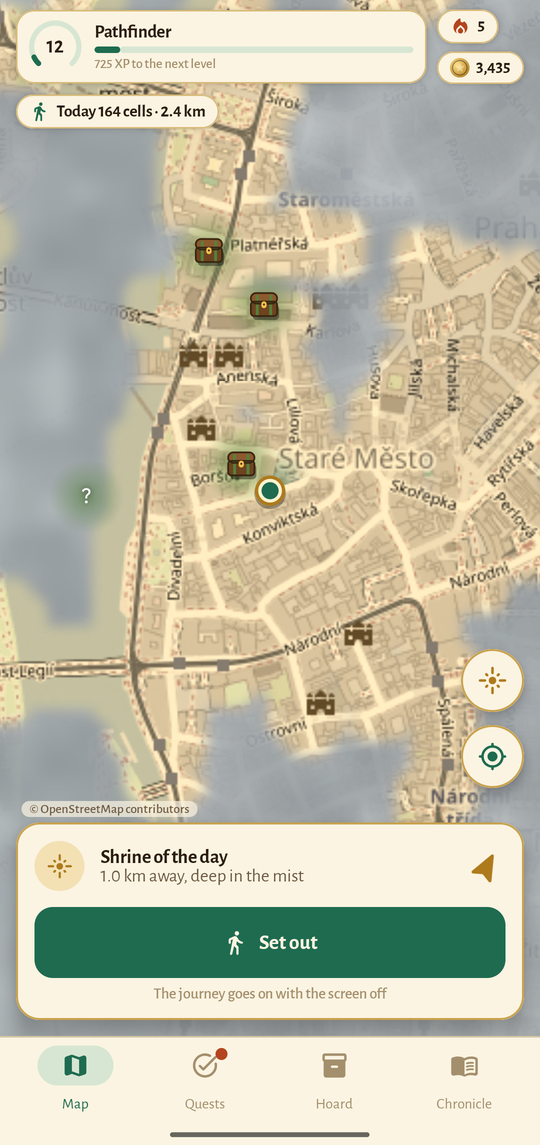
Your birthplaces on an old map with a slider through time, your lots next to the real spread of everyone ever born, and every book in the archive to read again in full.